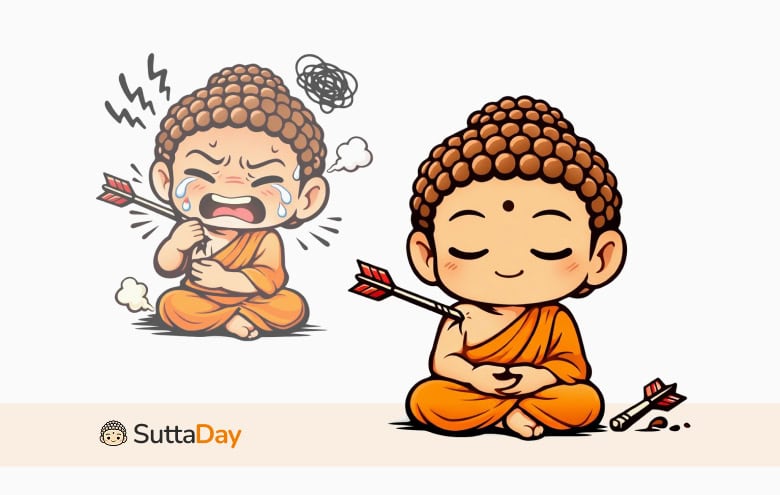
“When an uninstructed run-of-the-mill person is touched with a feeling of pain, he sorrows, grieves, & laments…
So he feels two pains, physical & mental.
When a well-instructed disciple… is touched with a feeling of pain, he does not sorrow, grieve, or lament…
He feels one pain: physical, but not mental.”
Collection: Saṁyutta Nikāya
Sutta: SN 36.6
Summary of the Sutta: SN 36.6
In SN 36.6, the Buddha explains the difference between pain and the extra suffering people often build on top of it.
He uses the image of two arrows. The first arrow is the original pain that comes with being human. Illness, disappointment, criticism, loss, physical discomfort, fear, grief. These experiences still happen, even to someone practising the path.
But after the first arrow lands, many people immediately fire a second one into themselves through mental reaction. The mind resists what happened, replays it repeatedly, turns it into a personal story, or starts spiralling into fear, blame, resentment, or self-pity.
That second layer is what the Buddha is drawing attention to.
The teaching is not saying pain should disappear or that difficult emotions are wrong. It is pointing to the way suffering often becomes multiplied once the mind starts tightening around the original experience and feeding it further.
What the Second Arrow Looks Like
The second arrow usually appears very quickly, often before you even realise it has started.
Someone says something sharp and the conversation keeps replaying in your head long after it has ended. A mistake at work turns into an entire story about failure or embarrassment. Physical pain appears in the body and the mind immediately starts resisting it, worrying about it, or imagining how long it will last.
One difficult moment becomes many additional moments layered on top of it.
That is the second arrow.
The event itself may only last a few seconds, but the mind keeps reopening it through rumination, resentment, defensiveness, or the need for reality to be different from how it currently is.
Most people know this feeling well. A single comment can shape the mood of an entire evening. A moment of rejection can quietly follow somebody around for days because the mind keeps returning to it and strengthening the emotional charge each time.
SN 36.6 is interested in that added suffering.
Not because the original pain is unreal, but because so much of human distress comes from everything that gets built around the pain after it arrives.
What It Looks Like to “Hurt Once”
“Hurt once” does not mean becoming emotionally numb or pretending painful things do not matter.
The first arrow still lands.
You still feel disappointment, sadness, physical pain, frustration, grief, or fear. The difference is that the mind does not immediately begin multiplying the experience by turning it into a running commentary about how unfair, permanent, personal, or catastrophic it all is.
The feeling is allowed to exist without becoming an identity.
Sometimes this is very small and ordinary. You notice irritation during a conversation but do not spend the next three hours mentally continuing the argument. You feel anxious before something important but do not keep feeding the fear with endless worst-case scenarios. Physical discomfort appears and instead of fighting the experience every second, the body softens around it slightly.
The pain remains, but there is less struggle wrapped tightly around it.
That is what the Buddha means by avoiding the second arrow.
Practice: First Arrow / Second Arrow
The next time something painful happens, pause for a moment before following the mind completely into reaction.
Ask yourself:
- What is the first arrow? The actual event, the raw feeling
- What is the second arrow? The story, the reaction, the resistance
Name the second arrow. Then see if you can not add it for one breath.
Even a 2% drop counts. That’s enough.
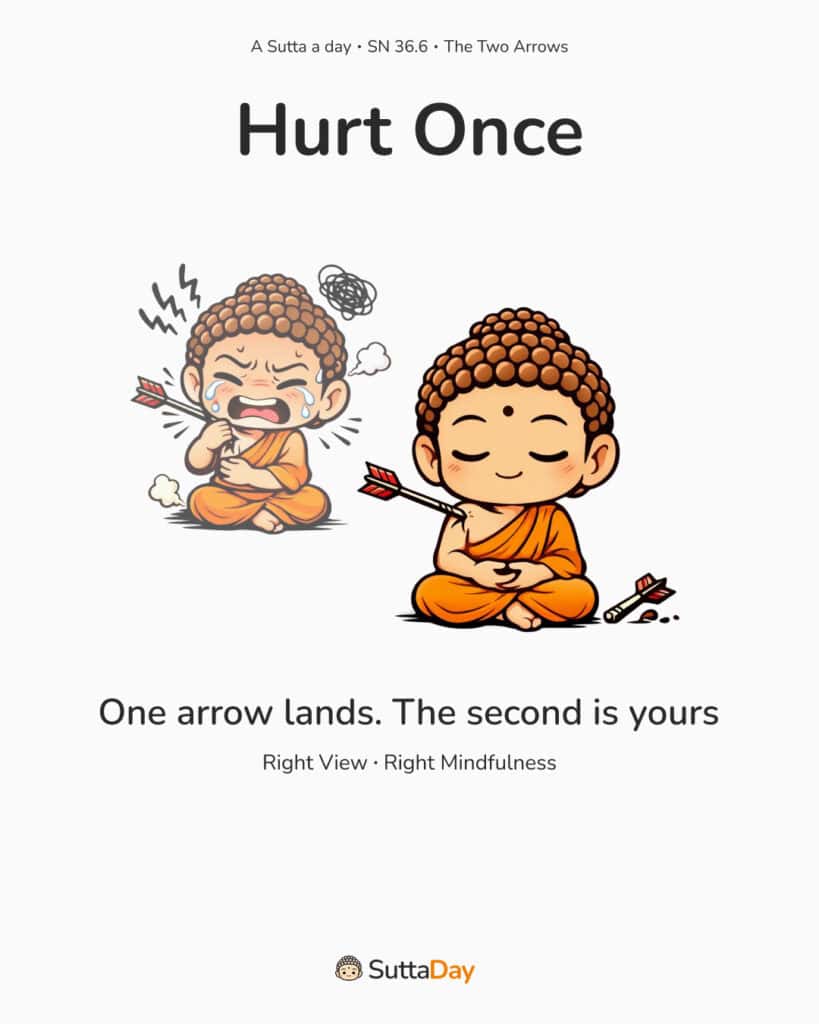
How SN 36.6 Trains the Eightfold Path
Right View
SN 36.6 directly develops Right View because it changes the way pain and suffering are understood.
The sutta separates unavoidable pain from the additional suffering created through mental resistance and reaction. That distinction matters because most people experience the two as one solid thing.
The teaching helps you see more clearly:
Pain is part of life.
The added struggle around the pain is not always necessary.
Once that becomes visible, reactions begin loosening slightly because the mind no longer treats every painful experience as something that must immediately become fear, anger, resentment, or identity.
Right Mindfulness
SN 36.6 also develops Right Mindfulness because the second arrow can only be recognised through awareness.
You start noticing the moment where pain turns into mental escalation. The body hurts, then the mind starts building stories. Somebody criticises you, then irritation keeps replaying the conversation internally long after it is over.
Mindfulness catches those movements earlier.
Instead of becoming completely absorbed in the reaction, there is a moment where you recognise:
“This is the second arrow forming.”
Sometimes the reaction still continues. Sometimes it softens. Sometimes it stops gathering momentum altogether.
That recognition is already part of the practice.
Closing Reflection
Most people expect suffering to come entirely from what happens to them.
SN 36.6 asks you to look more closely at what happens afterwards.
The mind has a habit of reopening painful moments repeatedly, feeding them with resistance, fear, replaying, blame, or the wish for reality to be different. Over time, that habit can become so normal that the second arrow feels inseparable from the first.
But they are not the same thing.
Pain is part of being human. The extra struggle built around the pain is often where suffering becomes much heavier than it needs to be.
Sometimes freedom begins with noticing the difference.
Frequently Asked Questions
What is the Two Arrows teaching in Buddhism?
The Two Arrows teaching from SN 36.6 explains the difference between unavoidable pain and the additional suffering created by mental reaction. The first arrow is the original painful experience, while the second arrow is the resistance, fear, story, or emotional escalation added afterwards.
What is the first arrow?
The first arrow is the initial pain that comes from life itself. This can include physical pain, illness, grief, disappointment, fear, criticism, or emotional hurt.
What is the second arrow?
The second arrow is the extra suffering created by the mind after the painful event has already happened. This includes replaying situations, resisting reality, catastrophising, self-judgement, resentment, or building painful stories around the experience.
Does Buddhism teach avoiding pain?
No. SN 36.6 does not deny pain or encourage emotional suppression. The teaching focuses on reducing the additional suffering created by mental resistance and reactivity after pain appears.
How do you stop the second arrow?
The practice begins by recognising the second arrow while it is forming. Awareness helps you notice when the mind starts replaying, resisting, or escalating a painful experience. Even a small moment of recognition can reduce how much suffering gets added on top of the original pain.
Stop at one.
Next
Go deeper within Eightfold Path: Right View, Right Mindfulness
Explore more within theme: Fear, Letting Go