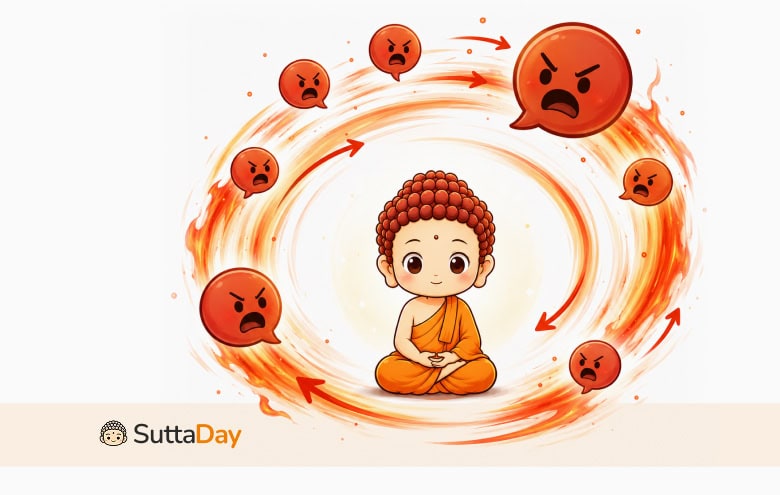
“Conquer anger with lack of anger; bad with good; stinginess with a gift; a liar with truth.”
Collection: Khuddaka Nikāya
Verse: Dhammapada 223
Summary of the Sutta: Dhp 223
When you meet anger with more anger, you don’t just let it out, you keep it going. The next sentence gets sharper, you start reading everything through the same lens, and the moment becomes harder to repair.
Dhp 223 is the reversal you can use right there. When the heat rises, choose what you add next, and choose something that doesn’t spread harm. “Anger with non-anger” is one part of it, and the rest of the line matters too: meet harm with good, tightness with giving, and distortion with truth.
Four ways to break the cycle
1. Anger with non-anger
When you feel the urge to strike back, choose restraint instead. That might look like waiting a beat before replying, or speaking firmly without trying to sting.
2. Bad with good
When you’re tempted to harm back, choose a clean, non-harming response. Sometimes it’s as basic as not taking the cheap shot, not mocking, not raising your voice, and choosing the next helpful thing instead.
3. Stinginess with a gift
Heat tightens you up, and you can end up withholding patience, generosity, and goodwill.
We want to be generous, not stingy with our gifts. And gifts can be small and practical: a little time before replying, a bit of softness in tone, a simple act that stops the mood spreading. Sometimes it’s an apology for sharpness, even if the issue still needs to be addressed.
4. A liar with truth
Heat loves exaggeration. It turns “that bothered me” into “you always do this.”
Truth here means accuracy. Describe what happened without inflating it, and don’t use half-truths to win.
Practice: stop the next link
When you’re heated, this is usually where things go wrong: a message lands badly, you’re tired, you feel dismissed, and your reply starts forming with a bite already in it.
So start with the earliest signal, which is almost always in your body. You’ll notice the jaw tightening, heat in the chest, faster thinking, or the urge to interrupt and strike back.
Then choose one clean move that reduces escalation:
- Say less.
- Wait.
- Speak, but remove the extra sharpness.
You’re still allowed to be clear. You’re choosing clarity without the burn.
If you’re unsure, take one breath before you answer. Not to become calm on command, just to stop anger writing the next sentence for you.
How Dhp 223 Trains the Eightfold Path
Right Intention: What’s your aim? Are you trying to reduce harm, or are you trying to hurt back? That choice is the difference between non-anger and retaliation.
Right Effort: Anger builds momentum and it always asks for one more round. The training is noticing the heat and not feeding it, so the state doesn’t grow through speech and action.
Closing Reflection
Anger often feels like it will bring relief, especially when you feel misunderstood or cornered, and it can feel like the only honest response in the moment. Then it spills over, and you’re left cleaning up words you didn’t fully mean, or replaying a scene you wish you’d handled differently.
If you can change what you add next, even once, you usually leave less behind to repair. That’s not a moral victory. It’s a practical one.
Frequently Asked Questions
What is Dhp 223 about?
Dhp 223 gives a set of reversals for stopping anger from spreading. Instead of meeting anger with more anger, you meet it with restraint, and you replace harm with good, tightness with giving, and distortion with truth.
What does “conquer anger with non-anger” mean?
It means you don’t escalate when heat is already there. You can still be direct or set a boundary, but you remove the extra burn that turns conflict into harm.
How do you respond to anger in Buddhism?
You notice the heat early and choose a response that reduces harm rather than spreads it. Dhp 223 frames this as meeting anger with non-anger, which often looks like pausing, saying less, or speaking clearly without trying to sting.
How do you practise non-anger in daily life?
Start with the first body signal of heat, then choose one clean move: say less, wait, or speak without the extra sharpness. Even one breath can stop anger writing the next sentence.
What does “meet harm with good” mean?
It means choosing a clean good when you feel the urge to harm back. That might be not taking the cheap shot, not mocking, not raising your voice, and doing the next helpful thing instead. In the same spirit, the verse also pairs stinginess with giving, and lying with truth, so you don’t add more damage to the moment.
Don’t feed anger.
Next
Go deeper within Eightfold Path: Right Effort, Right Intention
Explore more within theme: Anger