
“Heedfulness is the path to the Deathless.
Collection: Khuddaka Nikāya
Heedlessness is the path to death.
The heedful do not die.
The heedless are as if already dead.”
Verse: Dhammapada 21
Summary of the Sutta: Dhp 21
Dhp 21 is one of the Buddha’s strongest warnings about living without awareness.
The verse contrasts two ways of moving through life: heedfulness and heedlessness. The Buddha describes heedfulness as “the path to the Deathless,” while heedlessness is described as “the path to death.” The language is intentionally strong because the teaching is pointing toward something deeper than physical survival.
In this context, heedlessness means drifting through life without really seeing what is happening in your own mind. Attention gets pulled into distraction, craving, irritation, habits, and reactions so quickly that most of the day passes automatically.
Heedfulness means staying awake to those movements while they are happening.
Not controlling every thought or forcing the mind to be calm, but recognising where attention has gone before the next reaction fully takes over.
That is why this short verse has remained so relevant. The struggle it describes is still happening constantly in ordinary daily life.
What Heedlessness Looks Like Today
Most of the time, heedlessness feels ordinary, which is exactly why it is so easy to miss. You wake up and reach for your phone before you are fully awake. You half-listen during conversations while already preparing your reply. A moment of silence appears and your hand immediately reaches for stimulation before you have even noticed the movement.
Hours can disappear this way.
One reaction pulls into another until the whole day starts running on momentum. Notifications, irritation, scrolling, planning, comparing, worrying, refreshing, reacting. Attention keeps getting pulled outward and the mind slowly loses its steadiness without fully noticing it.
That is the kind of drifting the Heedfulness chapter keeps warning about.
The Buddha is not talking about occasional distraction. He is describing what happens when awareness fades so regularly that automatic reactions begin shaping your moods, speech, habits, and relationships without much conscious involvement from you at all.
Most people no longer even experience this as distraction because it has become the normal rhythm of modern life.
What Heedfulness Looks Like Instead
Heedfulness begins much earlier than most people expect.
It starts in the small moment where you notice what is happening before completely disappearing into it.
The phone lights up and you notice the pull before automatically unlocking it. Irritation rises during a conversation and you feel it in the body before the words come out. Defensiveness appears and you recognise it while it is still forming instead of only seeing it afterwards.
These moments are easy to overlook because they are so small, but they quietly change the direction of the day.
Sometimes you still react. Sometimes the reaction softens. Sometimes you stop halfway through and realise you do not actually need to continue feeding the mood that has appeared.
That recognition creates space.
Not perfect control, not permanent calm, just enough awareness for the mind to stop running entirely on habit.
Practice: Notice → Name → One Breath
When you feel attention getting pulled strongly toward something, begin there.
Notice the movement first.
Maybe it is irritation. Maybe craving. Maybe restlessness, defensiveness, or the urge to check your phone again without any real reason.
Then name it silently and simply.
“Impatience.”
“Wanting.”
“Restlessness.”
“Defending.”
After that, take one slower breath before acting.
The point is not to become perfect at mindfulness overnight. Throughout Dhp 21, the Buddha keeps returning to the importance of staying awake to your life instead of drifting through it automatically.
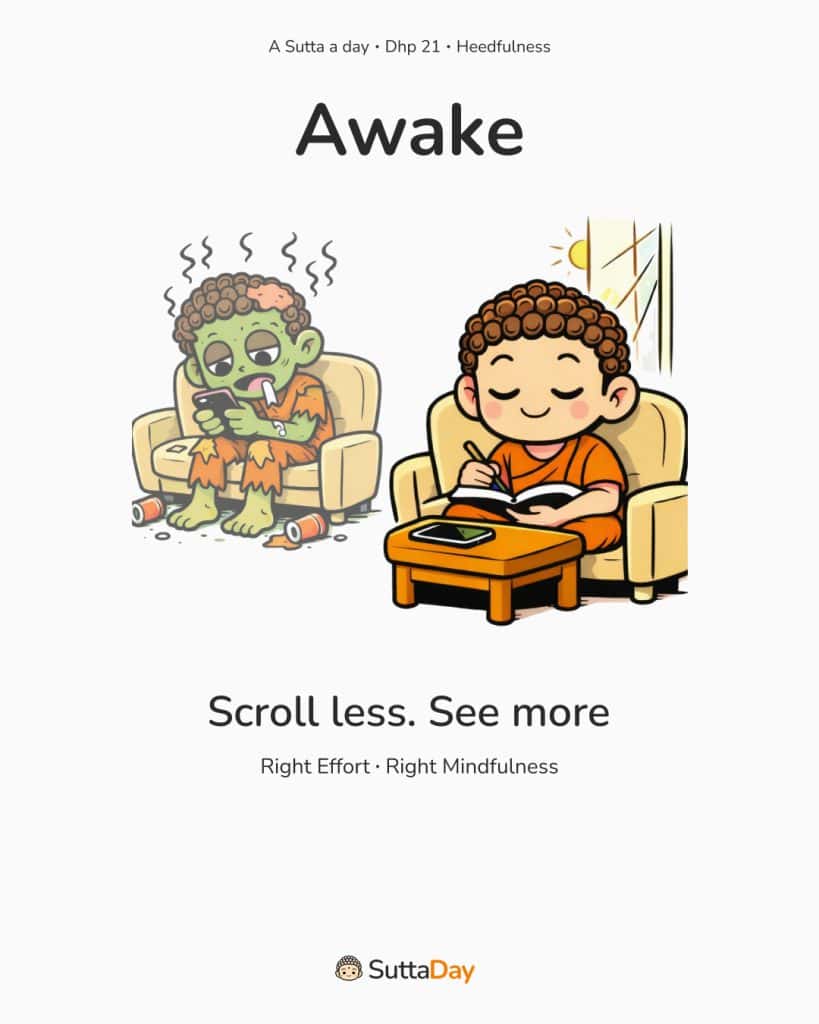
How Dhp 21 Trains the Eightfold Path
Right Effort
Dhp 21 strongly develops Right Effort because effort in Buddhism begins with recognising what is happening before habits completely take over.
If irritation is recognised early, there is a chance for restraint. If craving is recognised early, there is a chance to let go instead of feeding it further. If distraction is recognised early, attention can return before another hour disappears unconsciously.
Without that recognition, effort usually arrives too late, after the words have already been spoken or the reaction has already run its course.
Heedfulness creates the conditions for wiser effort to become possible.
Right Mindfulness
The sutta also directly trains Right Mindfulness because mindfulness is the ability to know what is happening while it is happening.
You begin recognising mental states more quickly:
“This is irritation.”
“This is craving.”
“This is restlessness.”
“This is defensiveness.”
Once a state is clearly seen, it becomes harder for it to run the entire mind unnoticed. Awareness weakens the momentum behind automatic reactions and gives a little more room for choice.
That is why heedfulness matters so much in Buddhist practice. Awareness changes the relationship you have with your own mind.
Closing Reflection
A distracted mind rarely collapses all at once. It drifts gradually through hundreds of unnoticed moments where attention is handed over again and again without much awareness of what is happening.
That is why Dhp 21 speaks so strongly about heedfulness.
The practice is not about becoming permanently calm or endlessly self-controlled. It is about waking up more often throughout the day and recognising where the mind has gone before habit completely takes over the next reaction, the next sentence, or the next hour.
Each moment of recognition changes direction slightly.
Over time, those moments shape a different kind of life.
Frequently Asked Questions
What is heedfulness in Buddhism?
Heedfulness in Buddhism means staying aware of where attention is going instead of moving through life automatically. In Dhp 21, the Buddha describes heedfulness as the path toward clarity and freedom because awareness allows you to recognise reactions, impulses, and habits before they fully take over.
What does “heedlessness is the path to death” mean?
In Dhp 21, “death” does not only refer to physical death. It points to a state of living mechanically, where attention is constantly lost in distraction, craving, irritation, and automatic behaviour without much awareness of what is happening.
How does heedfulness relate to mindfulness?
Heedfulness strengthens mindfulness by helping you recognise thoughts, emotions, and reactions while they are happening. The earlier distraction or reactivity is noticed, the easier it becomes to respond more wisely instead of reacting automatically.
How can you practise heedfulness in daily life?
A simple way to practise heedfulness is by noticing small moments where attention gets pulled away unconsciously. This could be reaching for your phone automatically, interrupting someone, reacting defensively, or scrolling without awareness. Recognising the movement itself is already part of the practice.
Stay awake.
Next
Go deeper within Eightfold Path: Right Effort, Right Mindfulness
Explore more within theme: Attention, Effort