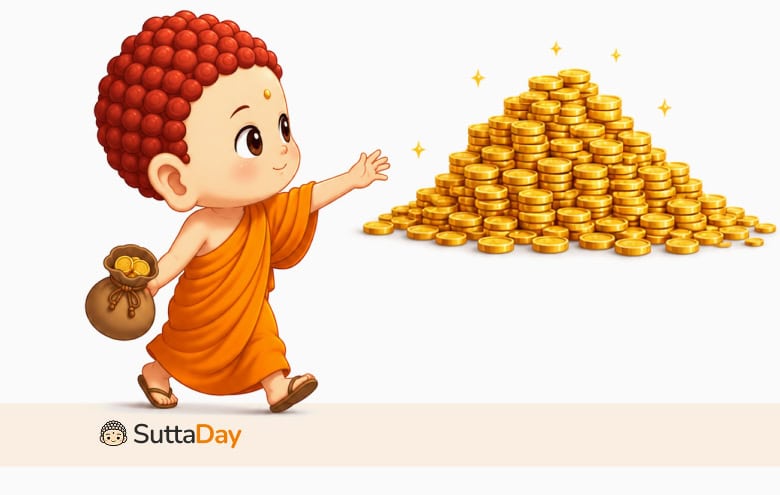
“I am endowed with blameless bodily action, blameless verbal action, blameless mental action.”
Collection: Aṅguttara Nikāya
Sutta: AN 4.62
Summary of the Sutta: AN 4.62
AN 4.62 lays out four kinds of happiness:
- the happiness of possessing wealth
- the happiness of enjoying wealth
- the happiness of being debt free
- the happiness of being blameless
The first three are real. You feel it when bills are paid, when you can provide, and when you can enjoy what you’ve earned without constantly bracing for the next expense.
The fourth holds up differently, because it comes from how you live. It’s built through what you do, what you say, and what you choose when it would be easy to take a shortcut.
The Happiness You Carry With You
If you’ve ever hit a financial milestone, you know the relief. The raise lands, the debt clears, the savings target is reached, and for a while the pressure drops.
Then life normalises and the next goal appears, and you’ve probably noticed how quickly your attention starts drifting towards the next target.
What stays closer is how you went after it.
You remember the meeting where you could’ve thrown someone under the bus and didn’t. You remember the shortcut you didn’t take. Or you look back on a decision years later and there’s nothing in you that needs to justify it.
That’s what blamelessness feels like. It’s the quiet ease of knowing you didn’t betray your own standards on the way to getting what you wanted.
When “more” starts choosing for you
The feeling of “not enough” rarely stays in your bank account. It starts influencing your behaviour, and it can start negotiating your standards if you don’t notice it.
You tell yourself you’ll slow down after one more promotion, and then you notice you’re letting things slide because the opportunity feels too good to miss. You become less generous with your time and attention because everything is being directed towards the next target.
You can earn more while becoming sharper under pressure, more evasive with the truth, or more willing to break promises when it suits you. The gain is real, but so is the cost, and you’re the one who has to live with it.
So ask yourself, plainly:
When you reach the goal, will you feel good about how you got there?
Practice: Before You Say Yes
Use this whenever a decision involves money, work, status, or opportunity, especially when you’re about to accept the role, sign the contract, or commit to the target.
Before you focus on the reward, ask what actions it will require from you.
Will it make it easier to be honest and keep your word, or will it quietly train you to cut corners, dodge, or harden?
What kind of person will you have to be to sustain this?
You don’t need perfect prediction. You’re checking whether the path to the goal is something you can live with.
Sometimes the actions required reveal the full cost, and you realise you’d rather have less, with a cleaner conscience.
How AN 4.62 Trains the Eightfold Path
Right Livelihood
Right Livelihood is about the ethics built into how you earn. It’s not only “what you do,” but the incentives you agree to live inside.
So when you look at work, the question becomes: does this way of earning depend on harm, deception, or exploitation, or can it be done cleanly? That’s why AN 4.62 highlights blamelessness. You can enjoy money more when you don’t have to look away from how it was made.
Right Action
Right Action is what you do under pressure, especially in the small moments where no one is watching.
Even in a decent job, you still meet situations where you can take what isn’t offered, mislead, break trust, or treat someone unfairly to get ahead. Blamelessness is the result of repeatedly choosing not to cross those lines, so later you don’t need to justify the way you behaved.
Closing Reflection
The first three kinds of happiness come and go. You can lose money, regain it, clear debt, take on debt again, and watch your “enough” line move as life changes.
Blamelessness doesn’t move in the same way. It’s the ease that comes from knowing you acted in a way you respect, even under pressure, and it stays available even when circumstances shift.
Frequently Asked Questions
What is AN 4.62 about?
It describes four kinds of happiness for a householder: possessing wealth, enjoying wealth, being debt free, and being blameless. The sutta places the highest value on blamelessness.
What are the four kinds of happiness in AN 4.62?
They are the happiness of possessing wealth, the happiness of enjoying wealth, the happiness of being debt free, and the happiness of being blameless.
What does “blamelessness” mean in Buddhism?
It’s the peace of knowing your actions, speech, and intentions don’t leave you with regret, because you acted in a way you can stand behind.
Why does the Buddha value blamelessness most?
Because it doesn’t depend on circumstances or numbers. It comes from how you live and the choices you make, and it stays with you after the excitement of gains fades.
How can I apply AN 4.62 to work and money?
Before saying yes to an opportunity, look at what it will require from you. Ask whether it trains honesty and steadiness, or whether it pushes you toward cutting corners, breaking your word, or treating people poorly.
How you live is a form of wealth too.
Next
Go deeper within the Eightfold Path: Right Livelihood, Right Action
Explore more within the theme: Work & Livelihood, Desire