
“If both husband & wife want to see one another not only in the present life but also in the life to come…
they should be in tune (with each other) in conviction, in tune in virtue, in tune in generosity, and in tune in discernment.
Collection: Aṅguttara Nikāya
Sutta: 4.55
Summary of the Sutta: AN 4.55
In AN 4.55, the Buddha describes what helps relationships remain steady over time.
The sutta does not focus on romance, attraction, or compatibility in the usual modern sense. Instead, it points toward four qualities that help two people move in the same direction through life: conviction, virtue, generosity, and discernment.
Conviction refers to shared values and confidence in what matters. Virtue refers to how people behave, especially under pressure. Generosity includes giving, yielding, forgiving, and caring for one another without constantly keeping score. Discernment means learning to see clearly what helps the relationship and what quietly harms it.
The teaching is practical because relationships are shaped less by isolated dramatic moments and more by repeated everyday patterns.
AN 4.55 asks whether two people are slowly training themselves toward greater trust, steadiness, and understanding together, or gradually pulling apart through resentment, defensiveness, and misalignment.
What Does “Living in Tune” Mean?
Two people can care deeply about one another and still feel increasingly out of sync.
Not because something is catastrophically wrong, but because they keep responding to stress, conflict, priorities, or communication in completely different ways. One person withdraws while the other wants immediate repair. One values steadiness while the other constantly chases stimulation or escape. One tries to soften tension while the other escalates when emotional pressure builds.
Over time, these patterns start shaping the emotional atmosphere of the relationship.
That is why AN 4.55 focuses so much on alignment.
The Buddha is pointing toward something deeper than agreement on surface preferences. Two people do not need identical personalities, hobbies, or opinions to live in tune. The question is whether they are gradually learning to move toward the same deeper qualities together.
Do both people value honesty?
Do both people care about repair after conflict?
Do both people recognise when pride, resentment, or defensiveness are starting to take control of the conversation?
These things matter because relationships are constantly being shaped by repeated direction rather than isolated moments.
What It Looks Like in Daily Life
Most relationships are not damaged by one huge event.
More often, tension builds quietly through small repeated interactions.
One person comes home already exhausted and answers sharply. The other stops bringing things up because they expect criticism or withdrawal. Small disagreements about money, parenting, responsibilities, screens, or time together start carrying emotional weight from older unresolved moments underneath them.
Eventually the relationship begins feeling heavier than it used to, even though nobody can point to one single thing that caused it.
AN 4.55 becomes practical exactly here.
You start noticing whether interactions are moving toward understanding or toward emotional distance. Whether conversations leave both people steadier or more defensive afterwards. Whether stress is increasing care and patience, or slowly wearing them away.
The sutta keeps returning to the idea of shared direction because direction shapes atmosphere over time.
Even difficult periods feel different when both people still sense they are trying to protect the relationship rather than win against each other.
The Four Qualities, Made Practical
Conviction
Conviction is about shared values.
What matters most to both of you underneath the daily noise of work, stress, parenting, money, and routine?
Not slogans or vague ideals, but the qualities you are actually trying to build into life together. Stability. Kindness. Honesty. A peaceful home. Generosity. Trust.
Without some shared direction underneath the relationship, people slowly start pulling toward different destinations.
Virtue
Virtue becomes most visible during pressure.
How do you speak when frustrated? Do conversations become cruel, sarcastic, contemptuous, manipulative, or emotionally punishing?
Virtue in relationships often looks ordinary from the outside:
- restraint during conflict
- honesty
- repair after mistakes
- refusing to deliberately wound each other
These small behaviours protect trust over time.
Generosity
Generosity is not only about money.
It includes yielding, listening, forgiving, softening, making room for another person’s difficulty, or letting go of the need to win every disagreement.
Relationships become exhausting when every interaction turns into emotional accounting.
Generosity interrupts that habit.
Discernment
Discernment means learning the patterns of the relationship honestly.
What escalates tension?
What settles it?
What conversations repeatedly go badly and why?
What helps both people feel safer, calmer, clearer, and more connected afterwards?
Discernment allows adjustment instead of endlessly repeating the same cycles without understanding them.
Practice: Check the Direction
The next time tension appears, pause briefly before reacting automatically.
Ask yourself:
What am I trying to do right now?
Am I trying to understand, steady, repair, defend, punish, avoid, or win?
Then ask:
Which quality would help most here?
Maybe the situation needs:
- more generosity
- more restraint
- more honesty
- more patience
- clearer discernment about what is happening
You do not need to solve the entire relationship in one conversation.
Sometimes one small movement toward steadiness changes the direction of the interaction completely.
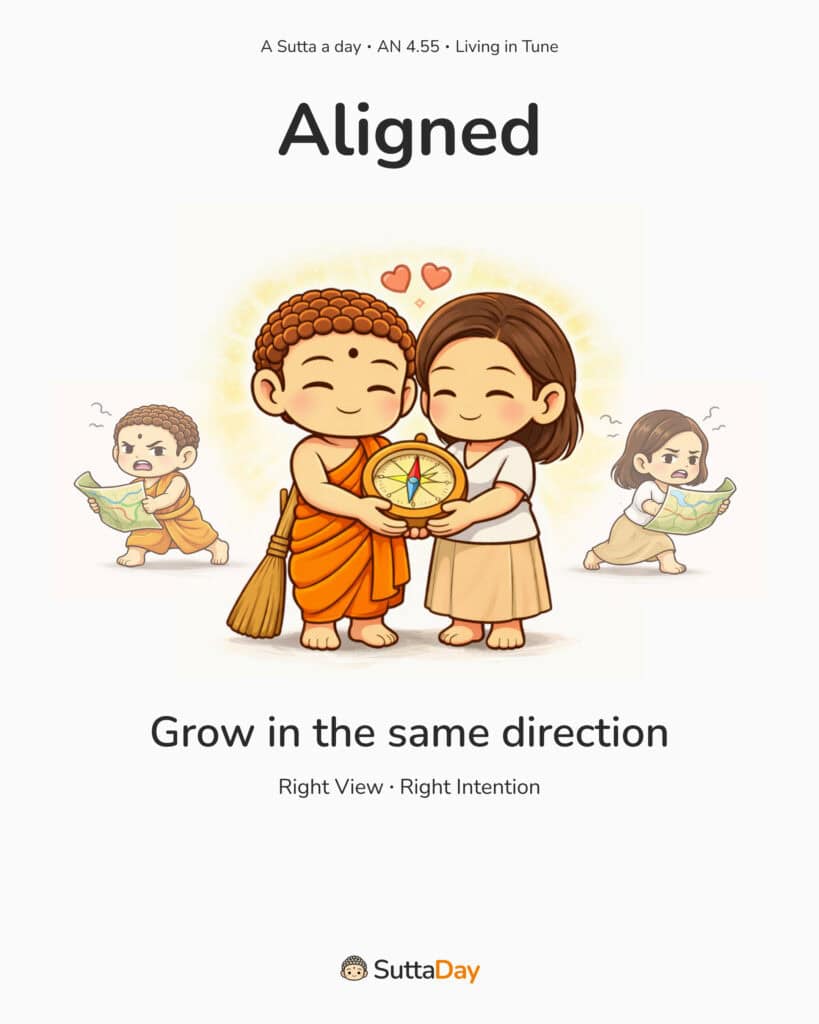
How AN 4.55 Trains the Eightfold Path
Right View
The teaching also develops Right View because it encourages people to look honestly at cause and effect inside relationships.
Some ways of speaking increase trust. Others slowly damage it. Some habits calm conflict. Others repeatedly escalate it. Discernment grows when people stop focusing only on who is “right” and begin paying attention to what actually leads toward more steadiness and less suffering over time.
That shift changes the way conflict itself is understood.
Right Intention
AN 4.55 strongly develops Right Intention because relationships constantly reveal what the mind is aiming toward underneath speech and behaviour.
During conflict, are you trying to understand or trying to hurt? Trying to repair or trying to protect pride? Trying to reduce suffering or increase it?
Goodwill, patience, non-harming, and the willingness to reconnect are all forms of Right Intention expressed through ordinary relationship moments.
The sutta keeps bringing attention back to the direction the heart is moving in.
Closing Reflection
Relationships rarely stay steady by accident.
They are shaped gradually through repeated moments of speech, reaction, forgiveness, patience, restraint, generosity, and repair. Over time, those moments either pull people closer into trust or slowly train distance between them.
That is why AN 4.55 focuses so much on shared direction.
Two people will still face stress, tiredness, disagreement, and change. The difference is whether they are learning to meet those pressures as opponents or as people trying to protect something together.
Living in tune does not mean becoming identical.
It means continuing to grow in the same direction.
Frequently Asked Questions
What is AN 4.55 about?
AN 4.55 teaches that harmony in relationships grows through being aligned in four qualities: conviction, virtue, generosity, and discernment. The sutta focuses on shared direction rather than surface compatibility alone.
What does “living in tune” mean in Buddhism?
Living in tune means two people are gradually moving toward similar values, behaviours, and intentions over time. They may still disagree or have different personalities, but they are trying to build the same kind of life together.
Does Buddhism teach avoiding conflict in relationships?
No. AN 4.55 does not suggest avoiding disagreement or pretending problems do not exist. The teaching focuses more on how people respond to tension, repair conflict, and protect the relationship during difficult moments.
What do conviction, virtue, generosity, and discernment mean in daily life?
- Conviction means shared values and direction.
- Virtue means behaving with honesty and restraint, especially under pressure.
- Generosity includes listening, yielding, forgiving, and giving without keeping score.
- Discernment means recognising what helps or harms the relationship and adjusting accordingly.
How can couples apply AN 4.55 practically?
A practical way to apply the teaching is by paying attention to direction during everyday interactions. Notice whether conversations, habits, and reactions are increasing trust and steadiness or gradually creating more tension and distance over time.
Stay aligned.
Next
Go deeper within Eightfold Path: Right View, Right Intention
Explore more within theme: Letting go